The Northern Rivers Watershed Initiative (NRWI) is a catchment and estuary restoration program devised for the Northern Rivers Joint Organisation (NRJO) footprint to address ecosystem health, water security and flood management issues across the Tweed, Brunswick, Richmond and Evans River systems.
Project Overview
The Northern Rivers Watershed Initiative (NRWI) was originally created through partnerships between Whian Whian Landcare, Lismore City Council’s Floodplain Risk Management Committee and Rous. Originally designed as a $150 million project across the region, its aims are to improve catchment health, provide elements of natural flood management and enhance landscape hydration within Northern Rivers catchments.
The on-ground works project is divided into four different workstreams, which are outlined below:
1. Riparian Restoration & Catchment Revegetation
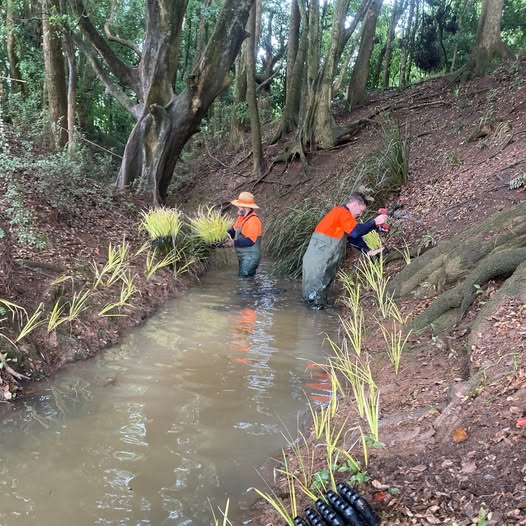
Riparian restoration & and catchment revegetation focuses on replanting native vegetation along riverbanks to stabilise soil, filter runoff, and improve water quality. Planting deep-rooted native species reduces runoff, boosts infiltration, provides shaded habitat for aquatic species and connects fragmented habitat.
2. Soil Health Improvements
North Coast Local Land Services is working with macadamia farmers to reduce erosion and runoff into creeks by improving ground cover and implementing erosion prevention works. On grazing land Byron Shire Council is working with farmers using a phone-based app co-designed with producers, encouraging more responsive land management.
These projects aim to improve soil structure, boost microbial activity, and reduce reliance on synthetic inputs. Healthier soils act like sponges—absorbing water, storing carbon, improving infiltration and slowing runoff.
3. Landscape rehydration
Landscape rehydration slows and spreads water across the landscape using structures like leaky weirs, perched wetlands and contours to support the role of plants in managing water and fertility in our landscapes. These works help water infiltrate into the soil, replenish groundwater, and support baseflows in creeks, and helps better store soil moisture in dry times.
The processes of landscape rehydration can boost on-farm productivity, support biodiversity, and serve as a buffer against extreme events.
4. Redesigning historical floodplain drainage
One of the more transformative aspects of the initiative involves rethinking the legacy of historical floodplain drainage systems. Originally designed for rapid water removal to enable grazing and cropping, these drains have often led to acid sulfate soil exposure, poor water quality, and habitat degradation. The initiative is working to identify and implement technology-driven solutions and scientifically informed modifications to the existing infrastructure of a key drainage network that will achieve positive water quality outcomes while maintaining current land uses and drainage efficacy.
This redesign process involves hydrological modelling, community consultation, and collaboration with floodplain managers and local landholders. The lessons learned will serve as invaluable reference material for stakeholders, policymakers, and engineers tasked with transforming floodplain management practices for the modern era.
Supplementary to this primary objective, consideration is also being given to interventions across other legacy drainage systems that could be implemented with the aim to move towards a more natural floodplain function — retaining water in the landscape longer, filtering nutrients and sediments, and reducing the velocity and impact of floodwaters downstream.
View the StoryMap here: Northern Rivers Watershed Initiative StoryMap
Progress so far
The project is currently in its implementation phase, with on-ground works occurring across the six local government areas in the four work streams.
Funding details
This initiative is funded through a $5 million grant from the NSW Government and is expected to be complete by late 2026.
Partners
The Northern Rivers Joint Organisation, Lismore MP Janelle Saffin, Ballina Shire Council, Byron Shire Council, Kyogle Council, Lismore City Council Richmond Valley Council Tweed Shire Council), North Coast Local Land Services and the Casino Food Coop.