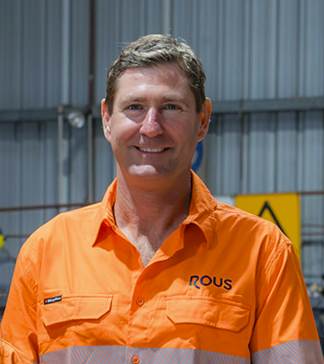
I grew up in Kingscliff in the first black family to live there and we experienced a lot of discrimination, it was extreme. I think my dad took this home with him and there was a lot of violence, so I left home young and I got into a lot of trouble. I moved around and worked all over the place, I was running away from myself, until I met my wife and my life changed.”
This was a major turning point. As he started to change his life around, he could see that it had a positive impact on the people – his family – around him.
I became aware that I could change things with a different attitude. I started taking responsibility and started to do things I hadn’t been able to do before. I gained confidence. When I helped myself, I was able to help other people.”
Greg has dedicated his life to supporting Aboriginal and Islander people in Lismore and surrounding communities. His major concern has been with the legacies people pass on to their children and with this in mind he developed Rekindling the Spirit to help Aboriginal families with substance abuse issues, problems with violent behaviour, and difficulty connecting with partners and children.
His experiences have taught him that behaviours and attitudes are human, and not race related. At Rous, he works in the Catchment and Cultural Awareness team. “My role at Rous is to break down barriers and build bridges within the organisation, and between Rous and the Aboriginal community and surrounding areas.
Rous’s operational footprint crosses over Widjabul Wia-bal country, Ngulinga, Arakwal…I work so that people understand the cultural aspects of this place, its heritage and the Aboriginal perspective. The Aboriginal perspective understands the river systems, the land, the sky, the sea and how it all works together; Aboriginal people have an intimate understanding of nature. It’s different from the western way of viewing things that has traditionally separated the environment into different parts. It’s important that we learn from the traditional custodians and how they used to live on the land, they’re the great survivalists. Aboriginal people from these lands used to shift out a month or two before floods came, they knew, and we could learn from this.”
So how does Greg go about doing this? And how is he shifting entrenched belief systems?
I began by introducing Yarning Circles at Rous, and this has played a huge role in breaking down barriers and attitudes. They can be really tough; I start and am vulnerable in front of people. I carry generational grief, the emotion comes through, tears run down my face. I’m expressing myself and it’s healthy. Then other people share. It’s given people a chance to see that life’s issues are similar for all of us, the only difference is the colour of our skin.
Recently we did a planting with the Casino Food Co-op at Booyong and had the Ngulingah Land Council come out and be a part of it with us, a Landcare group and another bush regeneration mob. I encouraged one of the young rangers, a Widjabul Wia-bal man, to do the Welcome to Country in my place and this gave him a sense of worthiness. Confidence plays a big role in helping young Aboriginal people. At Rous, I’d like to start opening more doors for black fellas, I’m pushing for more employment opportunities. I’d like to be there to support them, because it won’t be easy, but it will help break down the barriers and build the trust that we really need from both sides.”