
Nip weeds in the bud

Treating weeds early and often is the best way to stop them spreading across the region. Together, we can control weeds and protect our region’s biodiversity. Discover how to best manage targeted weeds and learn more about individual biosecurity responsibilities.
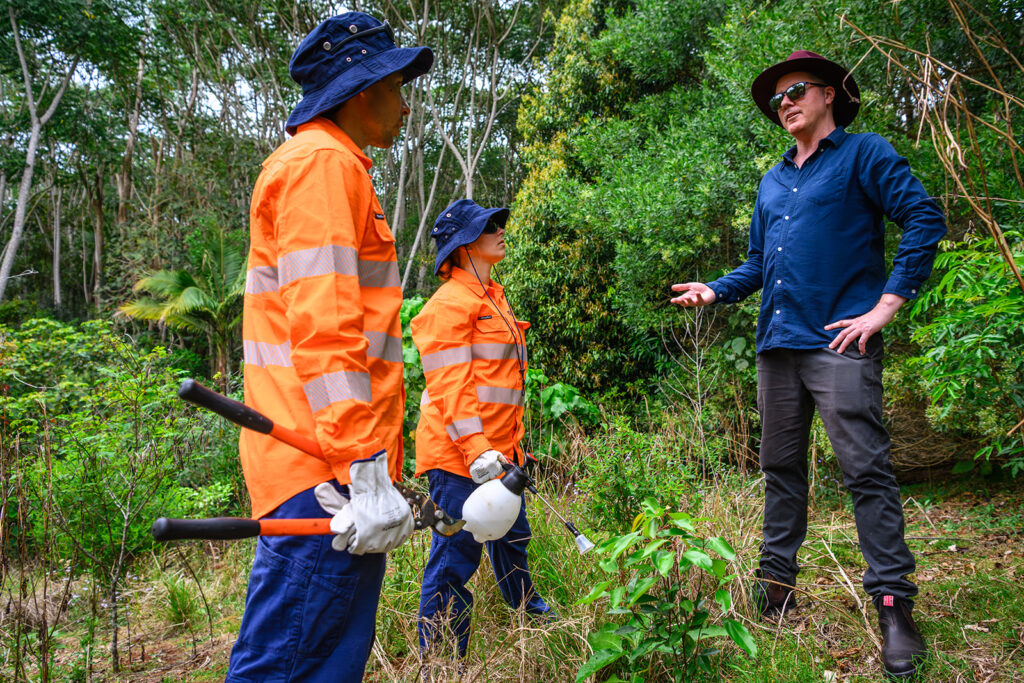
The General Biosecurity Duty applies to you
The NSW General Biosecurity duty helps prevent, eliminate or
minimise pests and weeds and applies to:
- Residents
- Property owners
- Gardeners, landscapers, and other contractors
- Machinery and equipment operators
- Gardeners who work with plants or soil
- Businesses that work with plants
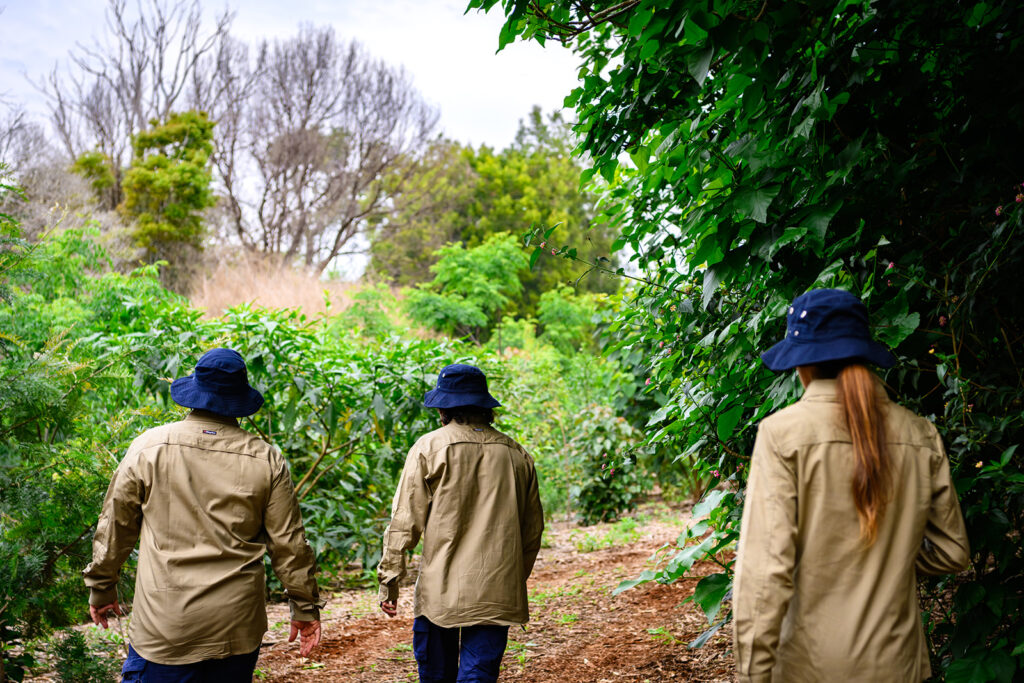
Fighting weeds behind the scenes
Some of Rous’ key weed management actions from the past year.
- Completed 5,764 property inspections to help prevent and eradicate priority weeds
- Covered 2,300 kilometres of roadside weed inspections and control
- Monitored 700 kilometres of waterways for weed management
- Planted 4,950 native seedlings at Fosters Spur to strengthen environmental resilience, biodiversity, and sustainable water management
- Connected with our community sharing 5,000 educational resources across 20 events
- Secured over $640,000 in funding for weed control programs
- Targeted Tropical soda apple, Chinese violet, Job’s tears and Bitou Bush thanks to the Good Neighbours Program and Crown Reserves Improvement Fund.
- Continued to manage some of the region’s most challenging weeds including Miconia calvescens, Alligator weed, Seeded banana, Frogbit, Water lettuce, Monkey’s comb, Giant devil’s fig, Parthenium weed and Hymenachne.
How Rous is supporting your biosecurity obligations?
We’re responsible for weed management inspections and enforcement, managing targeted weed control programs, controlling weeds on council-managed lands, and providing weed education, training and resources for the community. These activities help you meet your General Biosecurity Duties.
Weeds thrive on inaction
5 tips for meeting your biosecurity duties
1. Monitor and act
Monitor your property and act quickly when new weeds appear.
2. Nip ‘em in the bud
Remove weeds early before they flower or seed.
3. Keep it clean
Decontaminate machinery, tools, boots, and vehicles after working in areas where weeds are present.
4. Discard thoughtfully
Dispose of weeds carefully. Avoid dumping them, especially near waterways.
5. Contact Rous for advice
Ask for help. Our Weed Biosecurity officers are here to support you.
Nipping weeds in the bud on your own land helps protect the wider community and the environment from the spread of weeds.
The Northern Rivers’ most wanted weeds
Some common weeds of the Northern Rivers and how to control them.
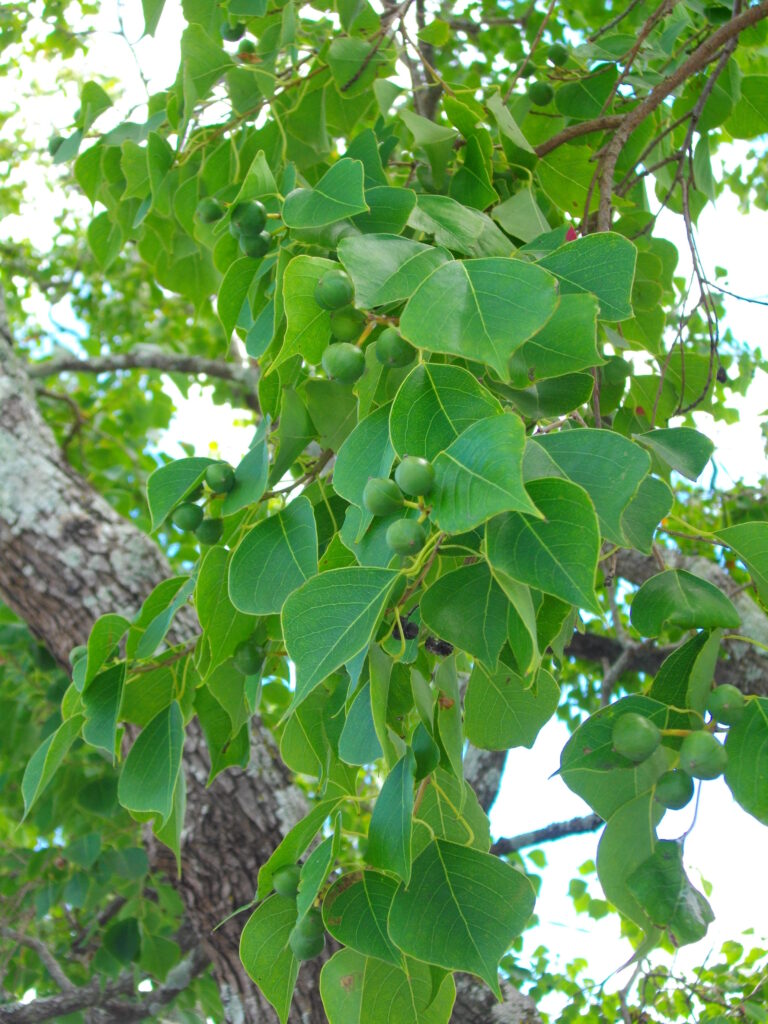
Chinese Tallow
Triadica sebifera
An invasive tree that outcompetes native vegetation along waterways and in bushland, producing abundant seeds and vigorous regrowth if cut. Control is best achieved by cutting the stump or applying stem injection to prevent resprouting.
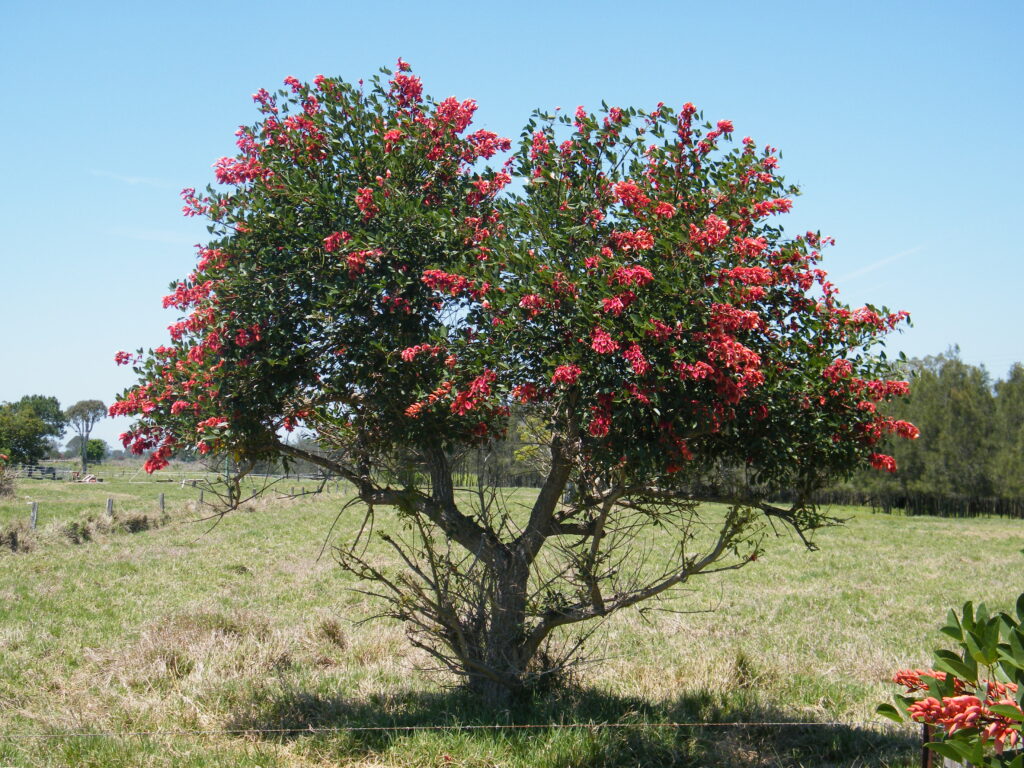
Cockspur coral tree
Erythrina crista-galli
A woody shrub/tree that invades riparian areas and floodplains, forming dense stands that suppress native plants. Management typically involves cut stump treatment or stem injection to kill the remaining stem and prevent regrowth.
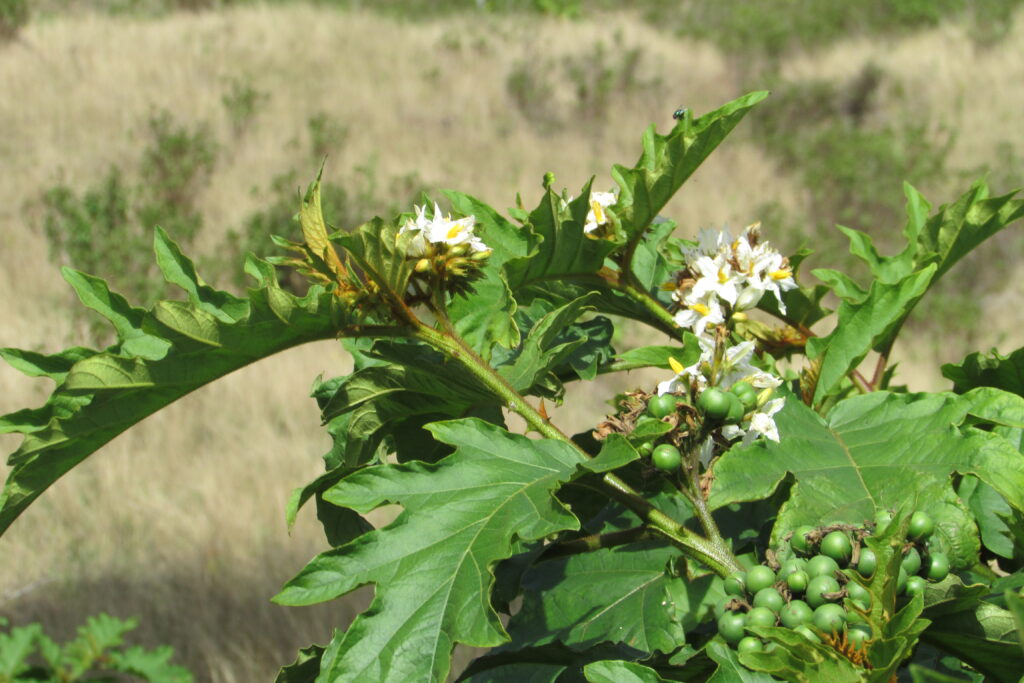
Giant devil’s fig
Solanum chrysotrichum
A spiny environmental weed common in disturbed areas that can form dense thickets and outcompete desirable vegetation. Control generally involves mechanical removal (e.g., cutting and disposal) and follow-up treatment, as shown in practical control videos on the Rous website (often demonstrating cutting, stump treatment or targeted herbicide use).
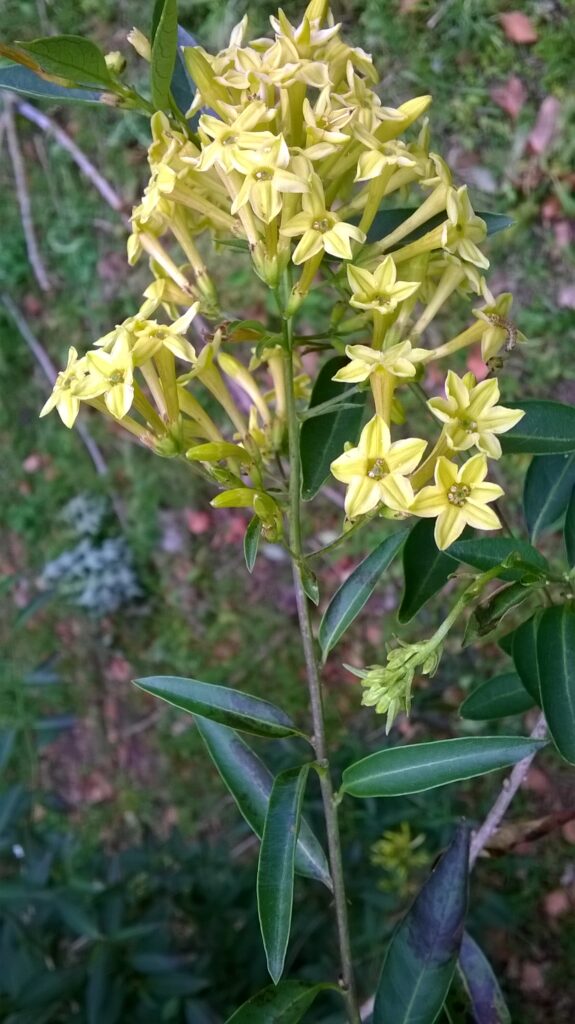
Green cestrum
Cestrum parqui
A poisonous shrub that can dominate pastures and bushland; all parts remain toxic even after dying. Effective control includes spraying foliage with herbicide, basal barking, cut stump treatment, or cut scrape and paint to ensure herbicide uptake and plant death.

Groundsel bush
Caesalpinia decapetala
A thorny climber/shrub that forms impenetrable thickets in bushland and pasture. Control through foliar spraying with appropriate herbicides is preferred to kill actively growing plants.
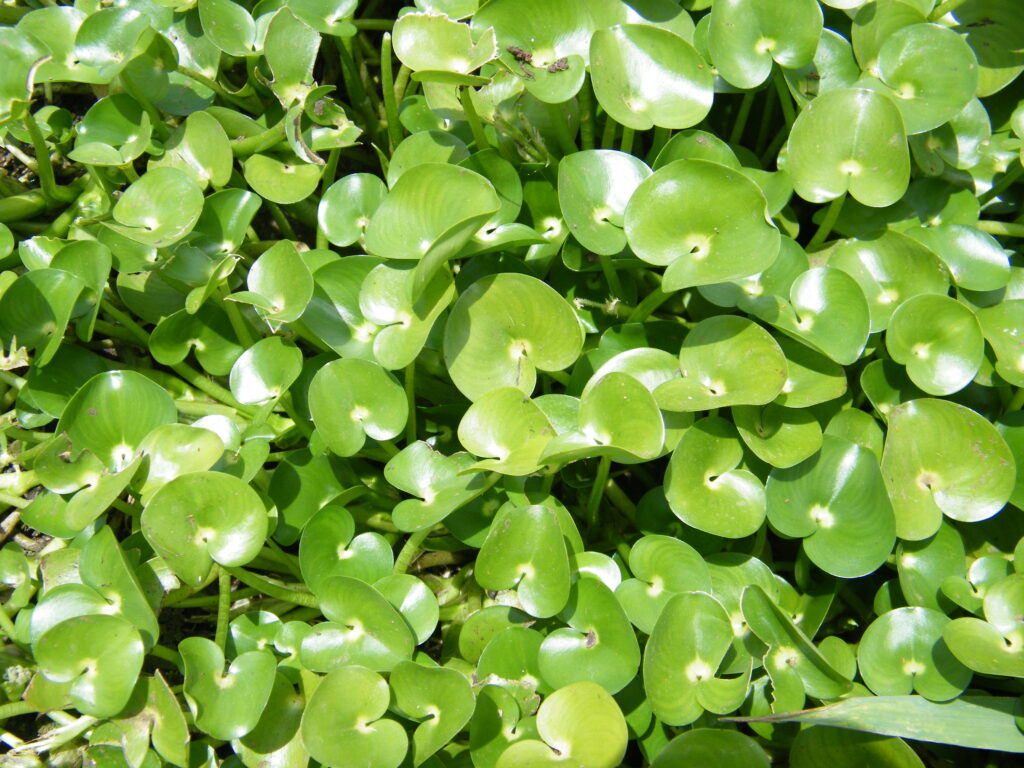
Kidney-leaf mud plantain
Heteranthera reniformis
A floating aquatic weed that forms dense mats in still or slow water, smothering other aquatic plants. Herbicide spray is typically recommended to reduce dense infestations, though practical suggestions for landholders should be confirmed with local authorities.

Mysore thorn
Baccharis halimifolia
A woody shrub that invades pastures, wetlands and forests, producing abundant seed that spreads easily. Control options include spraying with foliar herbicide, basal barking, or cut stump treatment to kill the root and prevent regrowth.

Water lettuce
Pistia stratiotes
A free-floating aquatic weed that forms thick mats on water surfaces, reducing oxygen and light penetration. Management usually involves physical removal of plants, and whether to ask landholders to spray should be considered based on infestation size and local advice.
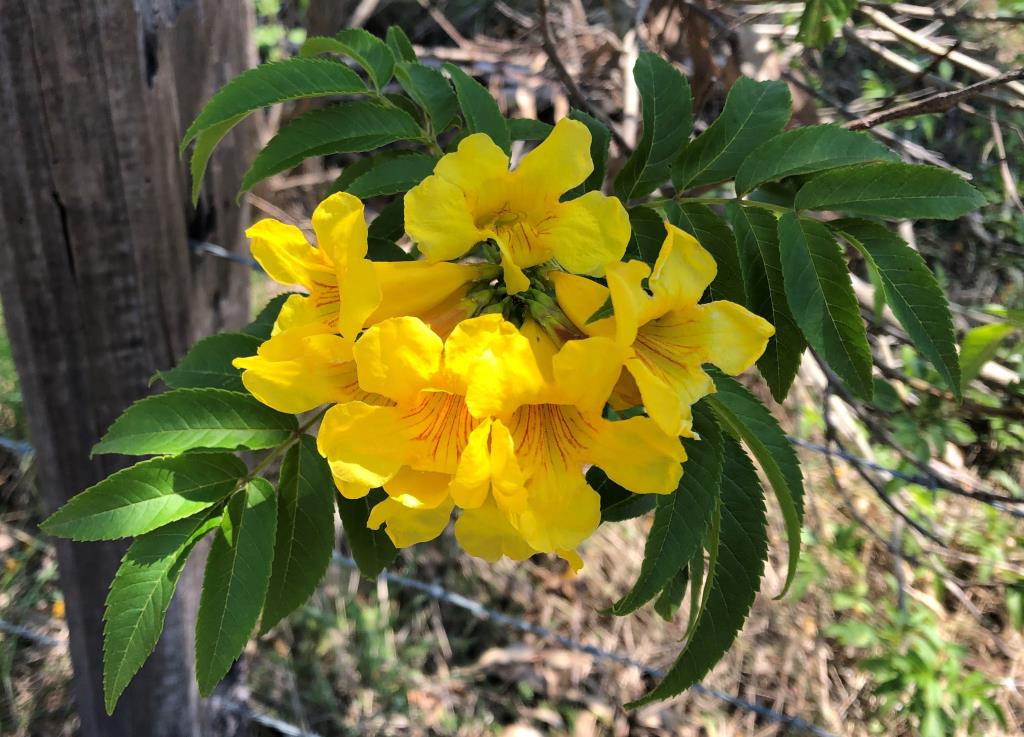
Yellow bells
Tecoma stans
An ornamental shrub that can escape cultivation and invade bushland, especially in dry areas. Control includes foliage spraying on smaller plants, basal barking, cut stump methods, or stem injection for larger stems to ensure herbicide delivery into the plant.
A year’s seeds creates seven years’ weeds
Nip weeds in the bud with these recommended weed management techniques.
Foliar Spray
Applying herbicide across the leaves and stems of actively growing plants. Best for small to medium weeds, vines and herbaceous species where you can cover all the foliage.
Cut and Paint
After cutting the stem at the base, painting concentrated herbicide on the exposed surface kills the stump and roots. Best for woody shrubs and small trees.
Manual Removal
Hand pulling or digging out small plants and seedlings ensuring all roots are removed. Best for isolated weeds and early infestations.
Spraying
Applying herbicide over the leaves of actively growing weeds to completely cover the foliage. Best for shrubs, grasses and dense infestations up to about 3 m tall.
Scrape and paint
Scraping the bark or stem and immediately applying herbicide where foliar spray cannot reach. Best for woody vines and climbing weeds.
Stem Injection
Herbicide injected directly into cuts or holes in large stems or trunks. Best for large woody weeds and trees that are difficult to treat by spraying.
Basal Bark
Painting or spraying herbicide all the way around the lower stem. Best for woody weeds with stems up to a few centimetres in diameter. Read more on page 8 of the DPI Handbook linked below.
Giant devil’s fig
Foliar spraying is an effective way to control Giant devil’s fig before it sets more seed. Cutting the stems and immediately applying herbicide (cut and paint) helps prevent regrowth by killing the stump and roots more directly.
Vehicle Washdown
Cleaning vehicles and machinery to remove seeds and plant fragments. Helps prevent spread of weeds between sites.

What makes it a targeted weed?
Targeted weeds are high priority weeds as determined by NSW DPI using the NSW Weed Risk Management System. We deliver targeted weed programs aimed at preventing weeds from establishing, eradicating them from our region, and containing new outbreaks across the Northern Rivers.
Read more about weed management:
What about other weeds?
We are the designated Local Control Authority for the Northern Rivers. That means we’re responsible for weed management inspections and enforcement, managing targeted weed control programs, controlling weeds on council-managed lands, and providing weed education, training and resources for the community.
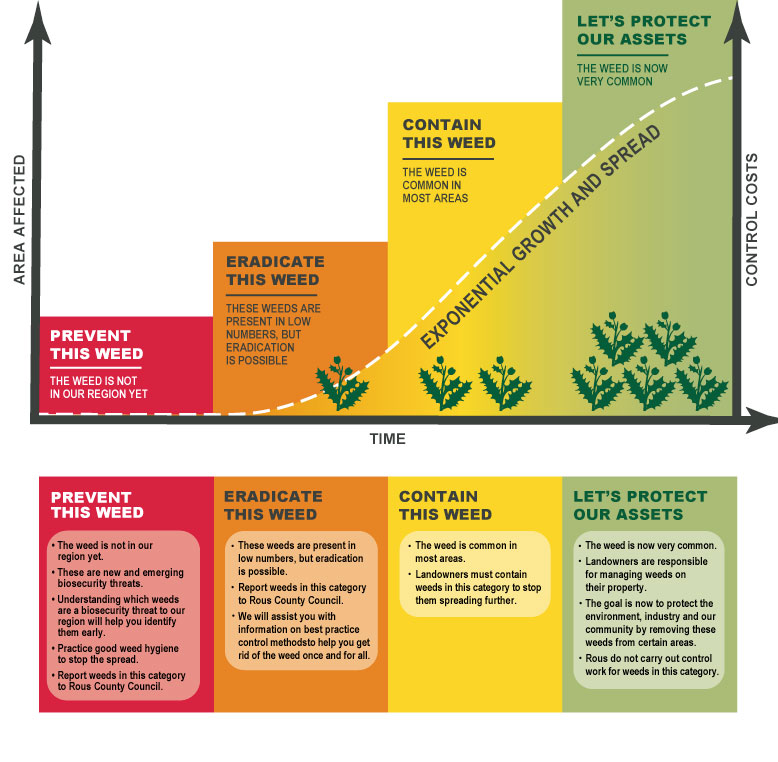
Weeds’ exponential threat
The invasive species curve below illustrates the importance of rapidly responding to new and emerging weeds, while preventing introduction of new weeds to our region.
Got weeds questions?
We’re eager to answer your weed management questions and help empower you to control, prevent and eradicate weeds on your land.
